Introduction: Why Your iPhone Suddenly Matters So Much
Every week, people call digital forensics experts with some version of the same question:
“The police took my phone. What can they actually see on it?”
Sometimes the question comes from someone whose iPhone sits in an evidence room after a search warrant was executed months ago. Sometimes it comes from someone who spoke with law enforcement at their front door, unlocked their phone on the spot, and now wonders what they may have exposed.
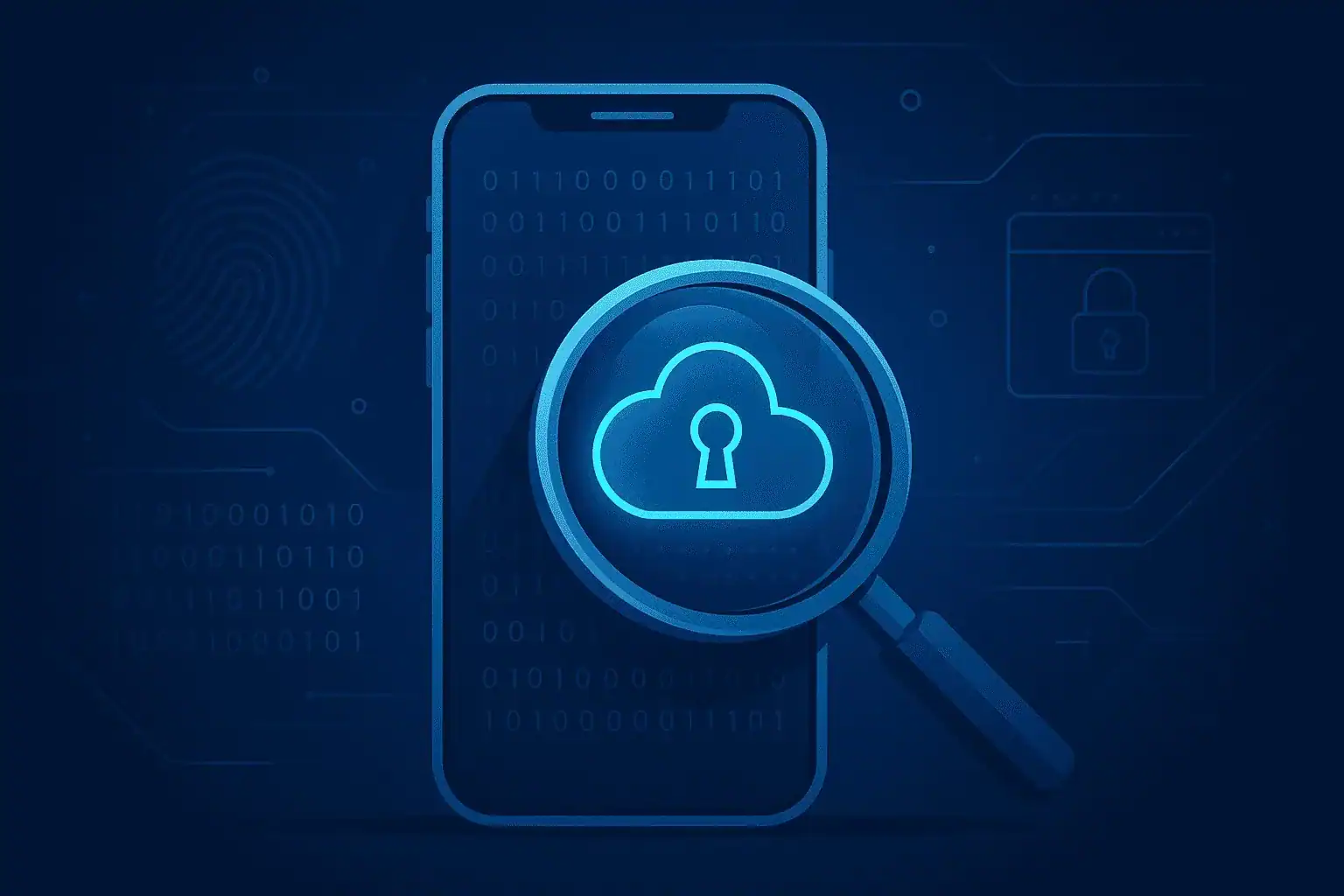
This article addresses what can law enforcement find on your iPhone, how those answers depend on the type of examination, and how a qualified expert can help you and your attorney understand the digital evidence.
I will also touch on digital privacy resources, forensic lab backlogs, and important legal and ethical guardrails—especially where child sexual abuse material (CSAM) and mandatory reporting laws come into play.
Nothing here is legal advice. If law enforcement has already contacted you, your first step should be to speak with a qualified attorney. Digital forensics can inform the conversation, but it does not replace legal counsel.
Two Real-World Scenarios
To ground the discussion, consider two real scenarios (with identifying details removed).
Scenario 1: iPhone seized under a search warrant
In the first case, law enforcement executed a search warrant and seized an iPhone. The device went into evidence, and months passed. The owner heard nothing.
When he called, his questions were all theoretical: what can law enforcement find on your iPhone and how likely is it that deleted messages can be recovered, and whether ordinary use after a forensic examination could “spoil” what the police collected.
Eventually he mentioned an important detail: his phone was still in police custody.
That single fact changed the analysis. If the device remains in evidence, the original data—and any potential digital evidence—is preserved in its original state. The question becomes less about what has changed on the phone and more about when, how, and by whom it will be examined.
Given how stretched many digital forensic units are, a delay of eight months or more between seizure and full examination is common. Digital evidence backlogs of 10–20 months have been documented in some environments, driven by limited staffing and the growth of smartphones and cloud data [1 , 2 ].
Scenario 2: Manual check at the door and a proactive exam
In the second case, law enforcement came to the home of an individual alleged to have sent inappropriate messages to a 14-year-old using a chat app. Officers asked to see his phone. He unlocked it and allowed a quick, manual review. They did not seize the device.
His attorney later hired Lucid Truth Technologies to conduct an iPhone forensic examination. Our expert acquired and examined the device in a defensible way and confirmed there were no indications of inappropriate contact in the device at issue.
In this scenario, the individual did three important things:
- He engaged counsel.
- Counsel engaged a qualified forensic examiner.
- The phone remained available for independent iPhone evidence analysis.
These scenarios illustrate why context matters when you think about a law enforcement iPhone search.
How Examiners Actually Look at Your iPhone
To understand what can law enforcement find on your iPhone, you need to understand how examiners access and analyze the data.
At a high level, there are three common approaches:
Manual review
An officer scrolls through the device with the user’s consent or with a search warrent. They may look at messages, photos, call logs, and installed apps. Screenshots or photographs of the screen can become evidence.
Manual review can expose very sensitive information, but it does not capture the full depth of artifacts available through iPhone digital forensics. It also tends to be selective.
Logical extraction
A logical extraction uses forensic software to collect data that the operating system exposes through approved interfaces. This often includes:
- Messages and chat data from supported apps
- Contacts, call logs, and voicemails
- Photos, videos, and metadata
- Some app databases, depending on support
Logical extractions are common in a police search of your iPhone because they are often faster and less technically complex than a full file system extraction, especially on modern encrypted devices.
Full file system extraction
A full file system extraction is the most comprehensive iPhone forensic examination. It attempts to acquire the complete file system—system databases, application data, logs, and sometimes remnants of deleted data.
A full file system extraction, when technically feasible and legally authorized, can reveal:
- Historical message databases and deleted fragments
- Detailed app usage artifacts
- System logs and crash reports
- Location-related artifacts
- Cached data and configuration files
For attorneys who want a deeper technical primer on extraction types, deleted data recovery, and the trade-offs between logical and full file system extractions, see our guide on understanding mobile device extractions [3 ].
The Electronic Frontier Foundation (EFF) describes mobile devices as powerful computers packed with sensors, running complex operating systems that give users limited visibility into the amount of data they record [4 ]. That same complexity is what makes iPhone digital forensics so powerful—and so sensitive.
What Data Might Be Available in an iPhone Forensic Examination?
No expert can guarantee what law enforcement will or will not recover from a specific device. The outcome depends on many factors, including:
- iOS version and security patches
- Device model and hardware security features
- Lock state and availability of the passcode or biometrics
- Forensic tools and techniques used
- Scope of the warrant or consent
- Whether any jailbreak or exploit was used
- The presence of cloud backups or synced data
That said, common categories of data examined in an iPhone digital forensics case include:
Message content and metadata
- SMS and iMessage threads
- Supported third-party apps such as WhatsApp, Signal, Telegram, or Kik
- Timestamps, participants, attachments, and sometimes deleted entries
Photos, videos, and media
- Camera roll, saved images, and videos
- Thumbnails and cached media
- EXIF metadata such as timestamps, device model, and sometimes GPS coordinates
App data and usage artifacts
- Chat histories and contact lists
- Login timestamps
- Local caches and configuration files
Location and movement indicators
- Wi-Fi and cell tower associations
- Location services logs (where available)
- Timestamped events that align with specific places
System logs and diagnostics
- Crash reports
- System event logs
- Background process traces
Even when data appears deleted, remnants can survive in databases, caches, or backups. However, modern encryption and secure deletion features also reduce what examiners can recover in many situations. No honest examiner will promise either “we can see everything you ever did” or “if you deleted it, no one can recover it.”
Why Your Phone Might Sit in an Evidence Room for Months
The caller whose phone remained in evidence for eight months had a very reasonable question: is this delay normal?
Unfortunately, yes. Across the United States and elsewhere, digital forensic units face growing backlogs as more cases involve mobile devices, computers, and cloud accounts. Limited staffing and budgets cannot always keep pace with demand.
Reporting from both government and industry has documented large numbers of backlogged forensic requests and significant delays in evidence analysis [1 , 2 ]. Some agencies report 10–20 month delays between evidence submission and full analysis for certain categories of digital evidence [1 ].
Backlogs arise for several reasons:
- The volume of digital evidence per case keeps increasing.
- Many investigations now involve multiple devices and cloud sources.
- Specialized training and tools are required, limiting the pool of qualified examiners.
- Cases are triaged, with violent crimes or child exploitation often prioritized over property crime.
From the outside, this can feel like silence or inaction. In reality, your case may be sitting in a queue while the lab works through higher-priority evidence.
A long delay does not necessarily mean that your device is “clean” or that nothing will happen. It often means the system is overloaded.
Independent iPhone Evidence Analysis: “Now Both of Us Will Know”
When people ask what can law enforcement find on your iPhone, they often want certainty. A candid answer recognizes that only an actual forensic examination of the device can move from speculation to facts.
My friend and SANS colleague Kevin Ripa, a highly respected digital forensics expert and instructor [5 ], sums this up well:
“Right now, only you know what you did with your phone. If I examine it, both of us will know.”
An independent iPhone forensic examination performed on behalf of the defense can:
- Identify which artifacts exist (or do not exist) that relate to specific allegations.
- Validate or challenge law enforcement reports and conclusions.
- Clarify the limits of the data—for example, showing where the record is silent rather than proving that something never happened.
- Help counsel make informed decisions about strategy, negotiation, or trial.
In some matters, this analysis involves acquiring the physical device. In others, it uses an existing extraction produced by law enforcement (for example, a UFED file or logical export) as the starting point for iPhone evidence analysis. Even if law enforcement keeps the physical phone, defense teams can often work from their extraction. I cover that in more detail in Mobile Phone Evidence Without the Device: Working from UFEDs, Backups, and Targeted Exports [6 ].
Independent examiners do not work to “beat the system.” They work to describe what the data shows and to identify where it has been misinterpreted or overstated.
Legal and Ethical Guardrails: Especially Around CSAM
Any discussion of a law enforcement iPhone search must address legal and ethical boundaries.
Digital forensics practitioners should:
- Operate under clear legal authority (warrant, consent, or court order on the government side; counsel engagement and client consent on the defense side).
- Respect constitutional, statutory, and ethical limits on the scope of searches.
- Maintain chain of custody and defensible methods.
Whether law enforcement looked at your phone with your consent or under a warrant, the legal authority matters. For a deeper discussion of that framework, see No Warrant, No Evidence? Understanding the Legal Imperative for Digital Forensic Investigations [7 ].
In some jurisdictions, including Michigan, certain professionals have obligations and protections when they discover child sexually abusive material (CSAM) during digital evidence work. Michigan’s computer technician reporting statute, MCL 750.145c, provides immunity from civil liability for computer technicians who report CSAM to law enforcement in good faith [8 ]. While attorney-client privilege and related protections may apply in some situations, the practical reality is that examiners must understand and comply with local law.
For that reason, reputable experts will not:
- Advise clients to destroy, alter, or conceal evidence.
- Help someone test “what the police can see” so they can hide or tamper with incriminating material.
- Ignore mandatory reporting obligations where they apply.
I’ve written more extensively about the ethics of digital evidence collection, including privacy considerations, informed consent, and the balance between truth-seeking and individual rights, in Balancing Act: Navigating the Ethical Landscape of Digital Evidence Collection [9 ].
The mission of a responsible forensics practice is to find the truth in a legal, ethical, and technically sound way—not to enable criminal behavior.
Privacy, Digital Hygiene, and EFF Resources
Many people who ask what can law enforcement find on your iPhone are also asking a related question: how can I protect my privacy going forward?
Here it helps to separate two ideas:
- Improving your digital privacy and security in general
- Responding to an active criminal investigation
For the first, organizations like the Electronic Frontier Foundation provide excellent guidance on smartphone privacy, encryption, and safer communication practices [4 , 10 ]. Topics include:
- Using end-to-end encrypted messaging apps appropriately
- Securing your devices with strong passcodes
- Understanding how apps collect and share data
- Making informed choices about backups and cloud services
These are responsible steps in any privacy-conscious life.
For the second, if law enforcement has already seized your phone or contacted you about its contents, you should stop looking for online “tips” and speak to a qualified attorney instead. At that point, iPhone digital forensics becomes part of a legal strategy, not a DIY privacy project.
Frequently Asked Questions About iPhone Digital Forensics
If my phone has been in evidence for eight months, is that good or bad?
The delay mostly reflects systemic backlogs, triage decisions, and limited lab capacity [1 , 2 ]. It does not, by itself, tell you whether anything incriminating exists on your device or whether charges will be filed.
If I still have my phone, does that mean the police did not find anything?
Not necessarily. In scenarios like a police search of your iPhone at the door, officers may rely on a quick manual review or ask for a consent-based extraction. They might still have captured screenshots, photographs, or a partial logical export. Only discovery in a criminal case and proper legal guidance can clarify what evidence exists.
Can an independent expert tell me what is on my phone?
Yes, within technical and legal limits. An iPhone forensic examination by a qualified expert can show what artifacts are present, how they relate to the allegations, and where the data is inconclusive. It cannot promise a particular legal outcome.
Will an expert report me if they find something illegal?
Experts must follow the law where they practice. In Michigan, for example, computer technicians who discover child sexually abusive material during their work have specific reporting obligations and protections under MCL 750.145c [8 ]. Privileged relationships and the specific role of the examiner can affect how these obligations apply. This is one reason examinations should be coordinated through counsel.
How Attorneys Can Use iPhone Digital Forensics Strategically
For defense attorneys, the question what can law enforcement find on your iPhone is only useful if the answer ties back to the theory of the case.
Strategic uses of iPhone digital forensics include:
Pre-charge assessment
- When clients know devices may be relevant to an ongoing investigation, counsel can engage an expert to provide early insight into potential exposure and evidentiary gaps. For more on early engagement, see The Importance of Early Case Assessment in Digital Forensics [11 ].
Independent review of government extractions
- Instead of relying solely on prosecution summaries, experts can review the raw extractions and perform their own iPhone evidence analysis.
Context and limitation analysis
- Digital artifacts often need careful interpretation. An expert can explain what a log entry, timestamp, or chat record actually shows—and where alternative explanations exist.
Expert testimony and consultation
- In appropriate cases, the expert can testify, or remain a consulting expert to help counsel cross-examine government witnesses.
In all of these uses, the goal is not to manufacture a story but to understand what the data does and does not say.
Conclusion and Next Steps
Law enforcement interest in a smartphone feels personal because it is personal. Modern iPhones hold conversations, photos, travel history, app data, and fragments of deleted content. It is natural to ask what can law enforcement find on your iPhone and how long the process will take, especially when months go by without updates.
The honest answer is that the outcome depends on legal authority, technical feasibility, backlog realities, and the specific facts of your case. A responsible examiner will not make promises without examining the device or the available extractions. Instead, they will work with your attorney to perform a defensible iPhone forensic examination, provide clear iPhone evidence analysis, and explain both the capabilities and the limits of digital forensics.
If you are an attorney, investigator, or client who needs professional digital-forensics support on a matter involving mobile devices or other digital evidence, you can learn more or request a consultation at:
https://lucidtruthtechnologies.com/hire-a-digital-private-investigator/
If you’re counsel on a matter where a phone’s already been seized or examined, Digital Forensics Defense Strategy: Pre-Trial Preparation Tips walks through how to integrate digital forensics into your broader defense strategy [12 ].
References
[1] Eclipse Forensics, “Options for Dealing with the Digital Forensics Backlog,” Eclipse Forensics, Jul. 10, 2022. [Online]. Available: https://eclipseforensics.com/options-for-dealing-with-the-digital-forensics-backlog/
[2] ADF Solutions, “Reducing Forensic Backlog: How Law Enforcement Can Improve Efficiency,” ADF Solutions, Mar. 23, 2023. [Online]. Available: https://www.adfsolutions.com/adf-blog/forensic-backlog-how-law-enforcement-can-reduce-delays-and-improve-efficiency
[3] Lucid Truth Technologies, “Understanding Mobile Device Extractions: A Lawyer’s Guide,” Lucid Truth Technologies, n.d. [Online]. Available: https://lucidtruthtechnologies.com/mobile-device-extraction-guide-for-lawyers/
[4] Electronic Frontier Foundation, “Mobile Devices,” Electronic Frontier Foundation, n.d. [Online]. Available: https://www.eff.org/mobile-devices
[5] K. Ripa, “Kevin Ripa – SANS Instructor Profile,” SANS Institute, n.d. [Online]. Available: https://www.sans.org/profiles/kevin-ripa
[6] Lucid Truth Technologies, “Mobile Phone Evidence Without the Device: Working from UFEDs, Backups, and Targeted Exports,” Lucid Truth Technologies, n.d. [Online]. Available: https://lucidtruthtechnologies.com/mobile-phone-evidence-without-the-device/
[7] Lucid Truth Technologies, “No Warrant, No Evidence? Understanding the Legal Imperative for Digital Forensic Investigations,” Lucid Truth Technologies, n.d. [Online]. Available: https://lucidtruthtechnologies.com/legal-imperative-for-digital-forensic-investigations/
[8] Michigan Legislature, “MCL Section 750.145c - Child Sexually Abusive Activity or Material,” Michigan Compiled Laws, n.d. [Online]. Available: https://legislature.mi.gov/Laws/MCL?objectName=MCL-750-145C
[9] Lucid Truth Technologies, “Balancing Act: Navigating the Ethical Landscape of Digital Evidence Collection,” Lucid Truth Technologies, n.d. [Online]. Available: https://lucidtruthtechnologies.com/navigating-the-ethics-of-digital-evidence-collection/
[10] Electronic Frontier Foundation, “Electronic Frontier Foundation | Defending your rights in the digital world,” Electronic Frontier Foundation, n.d. [Online]. Available: https://www.eff.org/
[11] Lucid Truth Technologies, “The Importance of Early Case Assessment in Digital Forensics,” Lucid Truth Technologies, n.d. [Online]. Available: https://lucidtruthtechnologies.com/the-importance-of-early-case-assessment-in-digital-forensics/
[12] Lucid Truth Technologies, “Digital Forensics Defense Strategy: Pre-Trial Preparation Tips,” Lucid Truth Technologies, n.d. [Online]. Available: https://lucidtruthtechnologies.com/digital-forensics-defense-strategy/