Skip to content
Search
  • HOME
  • about
  • Services
  • Blog
  • HOME
  • about
  • Services
  • Blog
CONTACT US

Can the location of a cell phone create an alibi?

At Lucid Truth Technologies, our clients ask us interesting questions about technology and forensics. Once, we were asked, "Can the location of a cell phone create an alibi?"

On a cell phone, the location history data that gets logged can come from multiple sources, including cell towers, Wi-Fi, and GPS, each with varying levels of accuracy. On an Android, location history is captured whenever an application (granted permission) calls the Google Play Services Location API on the device [1]. For example, if Google Maps is used during navigation, there will be history captured throughout the trip [2].

Because location data increases the utility of many of the apps on our phones, location history that's collected as part of our everyday device usage has great forensic value. Law enforcement frequently uses mobile phone location information to place a suspect at a crime scene.

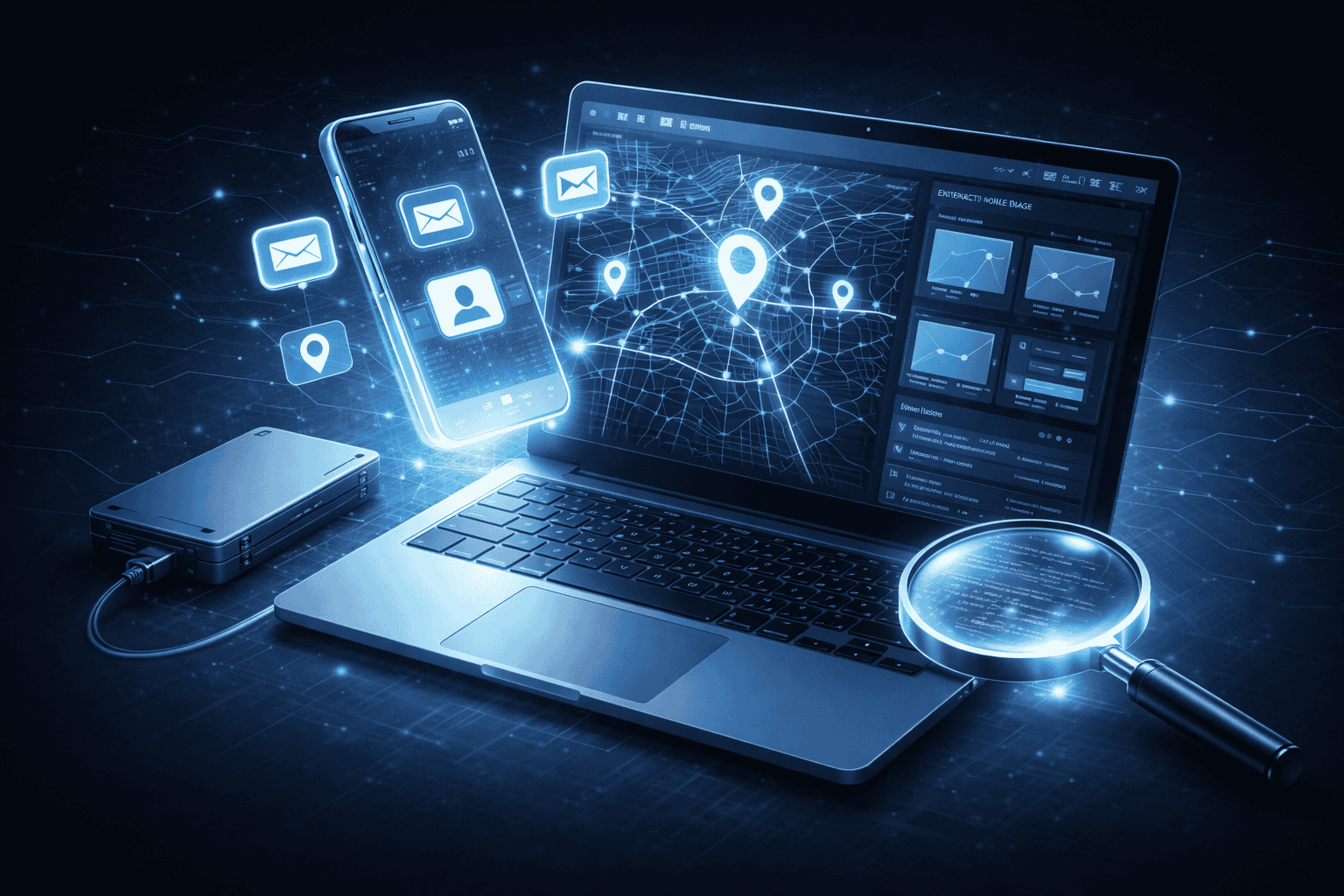
Cell phone location tracking visualization

Although obvious, it needs to be stated that device location does not necessarily mean that's the location of the device's owner. For example, a device is left on a dresser accidentally while the owner left home without it. Another example is if a friend picked up a forgotten device and returned it to the owner later in the day.

When location data is used to place a suspect at a crime scene, the suspect will need to answer difficult questions as to why their cell phone was at the scene of the crime if they were not. If the suspect had planned to commit the crime, then they may have decided to leave their phone behind.

A phone left at one's home while they commit a crime may turn out to be a terrible alibi. Typical users interact with their mobile phones multiple times per hour. We carry it with us, unlock the screen, use various applications, and respond to notifications. All of this generates data on the phone.

If no one is using the phone, it will be pretty clear the phone was left unattended. If a phone user always has their phone with them, except the one day that they decide to commit a crime, that is also suspicious and might be able to be used to show premeditation. An accomplice could certainly interact with the phone to generate the expected data to enhance the perception that the suspect was using their mobile device in the alibi location, but all that proves is that the phone was present at the alibi location—not the suspect.

Therefore, mobile device location data can undoubtedly be used to incriminate a person but has limited value in proving a person's alibi.

Proper analysis of mobile device location data is a critical factor. At Lucid Truth Technologies, we have used mobile device location data to scrutinize traffic accident reconstruction reports, reconstruct daily travel patterns, and even question evidence-handling procedures. If you have a case involving mobile device location data, contact us. We can explain the underlying technology, evaluate the technical factors that impact the accuracy of the data, and create impactful visualizations to clearly explain the technical truth.


[1] Google, "Location and context overview," [Online]. Available: https://developer.android.com/training/location/index.html

[2] T. Gabler, "Google Location Data," Forensic Focus, 17 March 2018. [Online]. Available: https://www.forensicfocus.com/Forums/viewtopic/p=6593235/#6593235. [Accessed 30 March 2019].

MORE POSTS

Digital illustration for blog post “Torrential Downpour and BitTorrent Evidence – A Forensic Perspective on P2P Investigations.” The image shows a white cloud with the BitTorrent logo raining digital raindrops onto a laptop displaying a forensic badge icon, set against a blue background with network node patterns. Represents Torrential Downpour BitTorrent evidence, P2P forensics, and digital investigation concepts for Lucid Truth Technologies.
Network Forensics

Torrential Downpour and BitTorrent Evidence – A Forensic Perspective on P2P Investigations

Read More »
November 10, 2025
A digital illustration in blue tones depicting the intersection of technology and law. A laptop on the left displays lines of network data and IP addresses. Behind it, an abstract eye icon represents surveillance, and faint IP addresses are scattered across the background. On the right side, legal symbols including a gavel, courthouse, and official document icon appear subtly. The main title reads “SUBPOENAS, PEN REGISTERS, AND IP ADDRESS LOOKUPS.”
Network Forensics

Subpoenas, Pen Registers, and IP Address Lookups

Read More »
October 20, 2025
A split-panel illustration shows the contrast between a defense attorney and a forensic expert. On the left, the defense attorney in a navy suit speaks confidently at a courtroom podium, symbolizing advocacy and due process. On the right, the forensic expert in a white lab coat examines a smartphone and works at a computer displaying a digital fingerprint, symbolizing impartial technical analysis. Between them, Lady Justice appears blindfolded and holding balanced scales, representing fairness. The background subtly blends courtroom and laboratory settings, with neutral tones of navy, gray, and white.
Legal Strategy

Defending Criminals: Are Defense Attorneys, Investigators, and Experts Working for the Dark Side?

Read More »
September 29, 2025
Load More ...
Digital illustration for blog post “Torrential Downpour and BitTorrent Evidence – A Forensic Perspective on P2P Investigations.” The image shows a white cloud with the BitTorrent logo raining digital raindrops onto a laptop displaying a forensic badge icon, set against a blue background with network node patterns. Represents Torrential Downpour BitTorrent evidence, P2P forensics, and digital investigation concepts for Lucid Truth Technologies.
Network Forensics

Torrential Downpour and BitTorrent Evidence – A Forensic Perspective on P2P Investigations

Read More »
November 10, 2025
A digital illustration in blue tones depicting the intersection of technology and law. A laptop on the left displays lines of network data and IP addresses. Behind it, an abstract eye icon represents surveillance, and faint IP addresses are scattered across the background. On the right side, legal symbols including a gavel, courthouse, and official document icon appear subtly. The main title reads “SUBPOENAS, PEN REGISTERS, AND IP ADDRESS LOOKUPS.”
Network Forensics

Subpoenas, Pen Registers, and IP Address Lookups

Read More »
October 20, 2025
Load More ...
Digital illustration for blog post “Torrential Downpour and BitTorrent Evidence – A Forensic Perspective on P2P Investigations.” The image shows a white cloud with the BitTorrent logo raining digital raindrops onto a laptop displaying a forensic badge icon, set against a blue background with network node patterns. Represents Torrential Downpour BitTorrent evidence, P2P forensics, and digital investigation concepts for Lucid Truth Technologies.
Network Forensics

Torrential Downpour and BitTorrent Evidence – A Forensic Perspective on P2P Investigations

Read More »
November 10, 2025
A digital illustration in blue tones depicting the intersection of technology and law. A laptop on the left displays lines of network data and IP addresses. Behind it, an abstract eye icon represents surveillance, and faint IP addresses are scattered across the background. On the right side, legal symbols including a gavel, courthouse, and official document icon appear subtly. The main title reads “SUBPOENAS, PEN REGISTERS, AND IP ADDRESS LOOKUPS.”
Network Forensics

Subpoenas, Pen Registers, and IP Address Lookups

Read More »
October 20, 2025
Load More ...

our services

Background Checks and Open-Source Intelligence Gathering

Mobile Forensics

Cloud Forensics

Computer Forensics

Lucid Truth Technologies is a registered trademark of Kenneth G. Hartman Consulting, LLC
©2025. Lucid Truth Technologies.
Privacy Policy
Scroll to Top

Subscribe